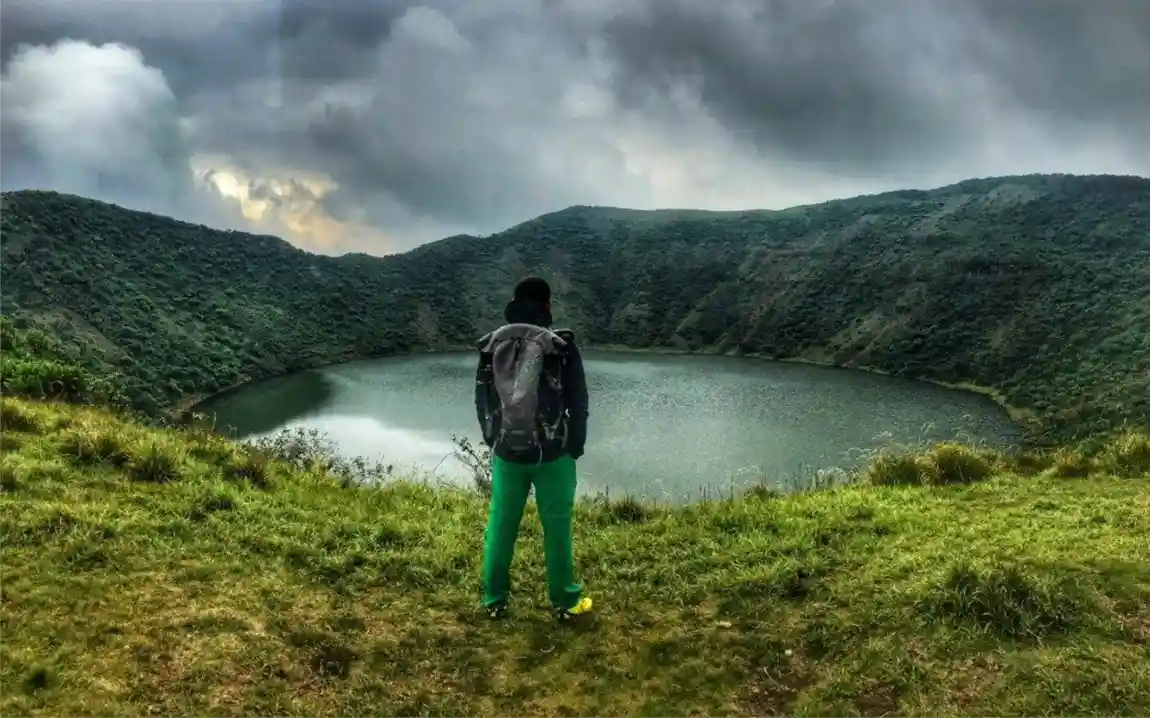

On a forested hillside above Lake Kivu near Kibuye, this lodge faces west across the water toward the mountains of the Democratic Republic of Congo. The shoreline below is dotted with small islands, fishing pirogues, and inlets, while the surrounding slopes are covered in banana groves, eucalyptus, and cultivated terraces. Guest cottages are distributed across the sloping site, each angled to face the lake rather than the neighbouring units. Construction uses local brick, timber beams, and thatched roofing, giving the buildings a grounded appearance that fits the hillside setting. Inside, the rooms stay simple, with wooden floors, mosquito nets, and large windows that open to the view. A central lodge building handles meals and drinks, with an outdoor terrace where most guests end up by late afternoon. The pace suits a rest day between Kigali and Nyungwe, or longer stays focused on the water.
Near Kibuye on the eastern shore of Lake Kivu, the lodge is roughly two and a half hours by road from Kigali. It works well as a midpoint stop on itineraries heading south to Nyungwe or north toward Gisenyi and Volcanoes National Park.
Ten cottages make up the accommodation, each with a bedroom, en suite bathroom, and private veranda facing the lake. Rooms feature double or twin beds, tiled floors, wooden furniture, hot water showers, and mosquito nets as standard.
The main lodge includes a restaurant, bar, and outdoor terrace with seating overlooking the lake. Guests can arrange boat trips, kayaking, island visits, and fishing through the lodge, while WiFi, laundry service, and secure parking are available on site.
Boat excursions to Napoleon Island allow guests to observe a large colony of fruit bats roosting in the trees along the water. The lake itself remains calm most mornings, making early kayaking trips a practical option before the wind picks up later in the day.